
First and foremost, macaroni and cheese is a method more than anything else. It’s the comfort food equivalent of a mother sauce—built on a foundation of essentials, but endlessly customizable. It requires four core elements: pasta, a thickened dairy medium, a melting cheese, and a flavoring cheese. Once these are in place, the rest is up to you.
The pasta is the base, and again—it can be anything, from classic elbow macaroni to tagliatelle. Its job is to deliver the cheese without stealing the spotlight. Personally, I like using cavatappi as my cheese delivery device. Its long, spiral shape is hollow, so it bursts in the mouth with liquid cheesy goodness, while the ridges on the outside grip the sauce, allowing it to congeal slightly and offer a richer cheese experience.
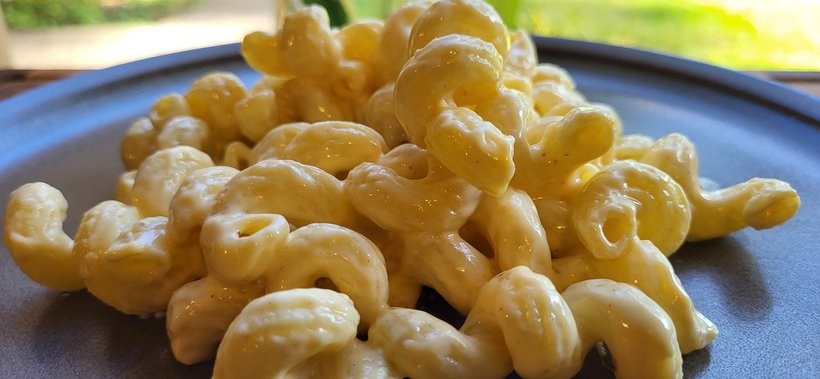
My go-to thickened dairy medium is a combination of half-and-half and cornstarch. Béchamel (a blond roux with seasoned milk) is traditional, but the sauce in macaroni and cheese isn’t just an enhancer—it’s the whole point. A proper cheese sauce should come as close as possible to the experience of smooth, melted cheese without breaking. Depending on the type and quantity of cheese I’m using, béchamel can sometimes fall short. That said, I do occasionally flavor my half-and-half, much like you would with a béchamel, depending on the final dish I’m aiming for.
There are other thickened dairy options. I’ve heard great things about starting with evaporated milk and Velveeta, and that’s perfectly fine if those are the flavors you're going for. Some folks even use milk with chemical emulsifiers like sodium citrate or sodium phosphate. And you'd think, given my aesthetic, that I'd be all over that—but I tend to stick with what I know.
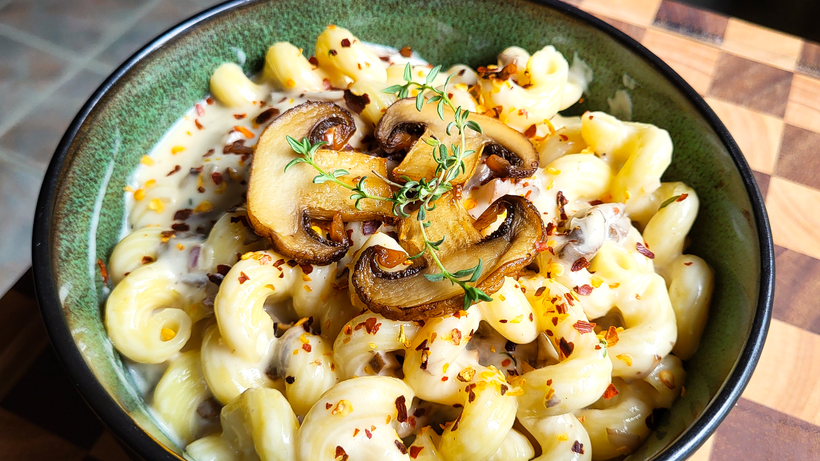
Next up: the melting cheese. This is crucial. It should be a young, moist cheese with a high fat content. The melting cheese acts as a bridge between the thickened dairy and the flavoring cheese. It’s the backbone of a good mac and cheese. Typically, it’s mild in flavor—though not always, depending on how punchy your flavoring cheese is. Think of the Gruyère in a classic Mornay sauce; it melts well and brings the main flavor.
The flavoring cheese is the star—but it should never dominate. You want to avoid the “too much of a good thing” effect. It’s not about how much it stands out, but how well it integrates. Think of it like a great actor or team leader: someone who elevates everyone else’s performance. That’s what you want from your flavoring cheese. It should bring its own truth but still play well with others.
That’s the methodology. Of course, there’s room for variation. For example, I’ll often—but not always—add a bit of mustard to complement the flavors. But I don’t consider it an essential. After all, there’s no mustard in Fettuccine Alfredo, which, at its core, is just another version of macaroni and cheese.
Now go cook something.